How Does Depreciation Recapture Show Up on the Tax Return When We Sell Equipment?
When a farm sells a tractor, combine, or other depreciated equipment, the sale can create taxable income even if the machine is paid off and the sale price feels modest. The key question is not whether there’s a loan. It’s how the sale price compares with the equipment’s adjusted tax basis—and how much depreciation the owner claimed or could have claimed.
That’s the heart of depreciation recapture reporting. For most farm equipment, the tax rules treat some or all of the gain as ordinary income under Internal Revenue Code Section 1245. In plain English: depreciation deductions that reduced taxable income in earlier years can come back as taxable income when the equipment is sold for more than its adjusted basis.
Before picking a strategy, ask the succession-planning question I ask every farm family: Who is likely to sell this asset, and when? The answer helps determine whose return reports the sale, which basis applies, and whether a sale, gift, or inheritance changes the tax outcome.
First, work out the equipment’s adjusted basis
Basis generally starts with the equipment’s tax cost, including eligible costs to acquire and place it in service. Depreciation reduces that basis over time. The basic calculation is:
Original tax basis − depreciation allowed or allowable = adjusted basis
“Allowed or allowable” matters. In general, the calculation can take into account depreciation the taxpayer claimed and depreciation they were entitled to claim, even if they failed to claim it. Section 179 deductions and bonus depreciation can also reduce basis. A machine can therefore have little or no remaining tax basis even when it is still productive and has substantial market value.
For example, a farmer buys a tractor for $200,000 and claims $150,000 of depreciation. Its adjusted basis is $50,000. If the farmer later sells it for $120,000, the taxable gain is generally $70,000—not the full $120,000 of proceeds. The lender payoff, if any, does not determine the ordinary income depreciation recapture gain.
How Section 1245 recapture works
Farm equipment is usually Section 1245 property: depreciable personal property used in a business. When the owner sells it for more than its adjusted basis, the gain is generally treated as ordinary income up to the amount of depreciation previously taken or allowable. That’s the ordinary-income recapture rule.
Using the tractor example, the $70,000 gain is less than the $150,000 of depreciation. The entire $70,000 is generally recaptured as ordinary income from asset sale. If the same tractor sells for $230,000 instead, the gain is $180,000. Up to $150,000 is generally ordinary recapture; the remaining $30,000 may receive Section 1231 treatment, sell inherited farmland capital gains subject to the applicable rules and the taxpayer’s prior Section 1231 losses.
Recapture is limited by the gain: selling equipment at a loss does not create positive Section 1245 recapture. A loss may still be deductible under the applicable business-property rules, but its reporting depends on the facts.
Example Adjusted basis Sale price Likely tax result Sale below basis $50,000 $40,000 $10,000 loss; no gain to recapture Gain below prior depreciation $50,000 $120,000 $70,000 gain, generally ordinary Section 1245 income Gain above prior depreciation $50,000 $230,000 $150,000 ordinary recapture; potential $30,000 Section 1231 gainThese examples assume a straightforward sale and omit transaction costs and other adjustments. A tax professional should review the depreciation history and sale documents before the return is filed.
Where does the sale go on the tax return?
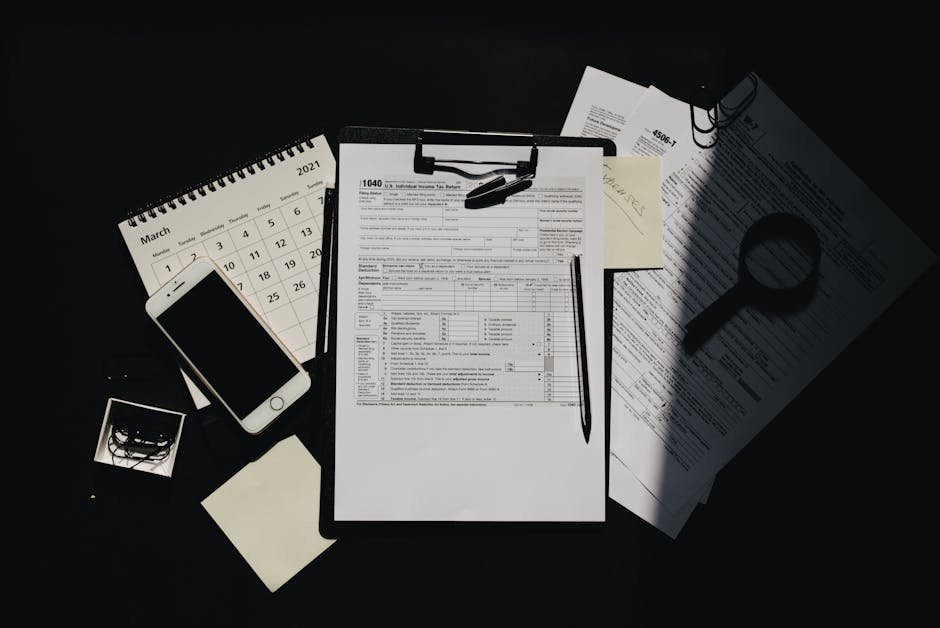
A taxable sale of farm machinery generally does not get reported as ordinary farm income on Schedule F just because the machine was used in the farming business. The sale is generally reported on Form 4797, Sales of Business Property. Section 1245 property sales are handled through the form’s recapture calculations, which determine how much gain is ordinary income and whether any gain may qualify for Section 1231 treatment.
For a sole proprietor, the resulting amount generally carries to the appropriate part of the individual return. The exact route can vary with the transaction and the taxpayer’s return. A partnership or S corporation usually reports the sale at the entity level, and the tax items may pass through to owners on Schedule K-1. Keep the sale paperwork and depreciation records together so the preparer can reconcile the amount reported with the equipment’s history.
Schedule F remains central to farm income and expenses, but it is not a catch-all for every transaction involving a farm asset. Reporting a machine sale in the wrong place can distort farm profit and complicate the return.
What records does your preparer need?
- The original purchase invoice or other support for the equipment’s cost.
- Depreciation schedules showing deductions claimed, including Section 179 and bonus depreciation.
- The bill of sale, auction statement, or dealer trade-in paperwork.
- Information about selling costs, trade-in terms, and any cash or debt involved.
- Ownership details: individual, partnership, corporation, or another entity.
A tax preparer should compare the sale information with the depreciation schedule—not just enter the check amount. That comparison is especially important for older equipment, assets moved between entities, and machines whose records have been kept across several generations.
Common farm equipment sale situations
Trade-ins
A trade-in can feel like a simple swap, but it does not automatically make the old machine’s tax consequences disappear. Federal tax law generally no longer treats exchanges of farm equipment as tax-deferred like-kind exchanges. A trade-in may be treated as a disposition of the old asset and a purchase of the replacement. The dealer’s paperwork can affect the numbers, so have the preparer review the transaction rather than assuming there was no sale because no separate check changed hands.
Installment sales
If the buyer pays over time, installment-sale rules may affect when some gain is reported. But Section 1245 depreciation recapture generally cannot simply be stretched out with the payments: the recapture amount is generally recognized in the year of sale. The remaining gain may receive different timing treatment, depending on the facts. This is a good reason to ask about tax treatment before agreeing to seller financing.
Equipment inherited from a family member
Inherited equipment may receive a basis adjustment under the applicable inheritance rules, often based on fair market value at the date of death. That can change the gain calculation compared with the deceased owner’s old basis. The result depends on ownership, valuation, and subsequent depreciation, so don’t assume the heir inherits the decedent’s exact recapture bill—or that the equipment can be sold tax-free.
Gifted equipment is different: gifts generally involve carryover-basis rules, with additional rules that can apply when the asset’s value is below basis. A gift, inheritance, and sale can produce very different tax results. Review basis before transferring the machine.
Why this matters in farm succession planning
Farm families often worry about estate tax first. For most farm estates, federal estate tax exposure is rare under current law, although thresholds, state taxes, and family circumstances can change. For many operations, the bigger succession threat is income tax—especially when land, livestock, or heavily depreciated equipment changes hands or gets sold.

Depreciation can be valuable. It reduces taxable income while the farm owns and uses an asset. But it also lowers basis, which can create a future tax bill if the equipment is sold at a gain. A paid-off combine may still carry a substantial tax consequence. That’s one of the “numbers that should scare farmers more” than the phrase “estate tax” by itself: the adjusted basis on the depreciation schedule.
When planning a transfer, compare the tax consequences of selling, gifting, or inheriting the equipment. Don’t rely on generic advice that a trust fixes everything. A trust may address ownership or administration goals, but it does not automatically erase depreciation recapture or guarantee a favorable basis result. The owner, timing, tax basis, and expected sale date all matter.
Farmers can follow agricultural business and policy coverage from outlets such as AGDAILY and research from the USDA Economic Research Service for broader industry context. For an accessible audio option, the Instaread audio player (Instaread) can be useful for listening to book summaries while traveling between fields. Neither replaces reviewing your own depreciation schedule before a sale.
A practical checklist before you sell
- Identify the seller. Confirm which person or entity owns the equipment and will report the disposition.
- Find the tax basis. Reconcile purchase cost and depreciation claimed or allowable.
- Estimate the gain or loss. Compare expected proceeds, adjusted for relevant selling costs, with adjusted basis.
- Ask how Section 1245 applies. Estimate ordinary-income recapture and identify any potential Section 1231 gain.
- Review the deal structure. A trade-in, installment arrangement, or transfer to family can change the reporting and timing.
- Coordinate with the return preparer. Bring the depreciation schedule and sale documents before filing.
The bottom line
Depreciation recapture reporting usually starts with Form 4797, not Schedule F. For farm equipment subject to Section 1245, gain is generally ordinary income up to the amount of depreciation previously claimed or allowable. The taxable amount is based on gain over adjusted basis—not the loan balance, the original purchase price, or the total sale proceeds.
Before the auction, dealer trade, or family transfer, ask: Who is likely to sell this asset and when? Then check the depreciation schedule. That simple step can turn a surprise tax bill into a planned part of the farm’s succession strategy.